Behavioral science
Research on planning and decision-making
Over the past 10 years, I’ve led 10+ behavioral studies and collaborated on 20+ more across academic and applied settings.
I design tasks where strategy shows up in behavior, then measure what participants actually do, not just what they report. My research centers on a few themes that reveal how individuals navigate everyday sequential decisions: how plans are made and carried out, which behaviors are automatic versus deliberate, how perceptual cues shape choices, and when cognitive effort is invested or offloaded onto an external tool or action, like using a calculator instead of doing mental math. In UX research, these themes show up as questions like whether users will rely on notifications or saved carts, which workflows feel intuitive and which take time to learn, and how visual design guides attention and decisions.
Comparing adults with young children or other primates helps reveal which behaviors emerge early in development or occur automatically, and which are shaped by experience. My dissertation explored the experience side, examining financial decision-making in 236 youth. Math ability was the strongest predictor of sound decisions, and real-world experience also played a role. I brought the same lens to my Market Movers usability study, comparing novice and experienced users to see which parts of the app felt intuitive and which had to be learned.
- 7first-authored publications
- 40+conference talks and posters
- 12undergraduate researchers mentored
- 4courses taught, with up to 120 students each
- 5outside organizations partnered with
- 6peer-reviewed journals reviewed for

From research questions to product questions
Methods I use
Design
- Experimental designWithin- and between-subjects, pre/post
- Behavioral tasksComputerized and hands-on, custom JavaScript
- Pilot and usability testingRefining tasks based on how participants interacted with them
Measurement
- Behavioral codingObservation, BORIS, ZooMonitor
- SurveysValidated and custom scales, Qualtrics
- Moderated and unmoderated sessionsIn-person and computerized testing
Analysis
- StatisticsR and SPSS (regression, hypothesis testing)
- Qualitative codingThemes from open-ended responses and participant feedback
- CommunicationPeer-reviewed papers, talks, teaching, public outreach
Sharing my work
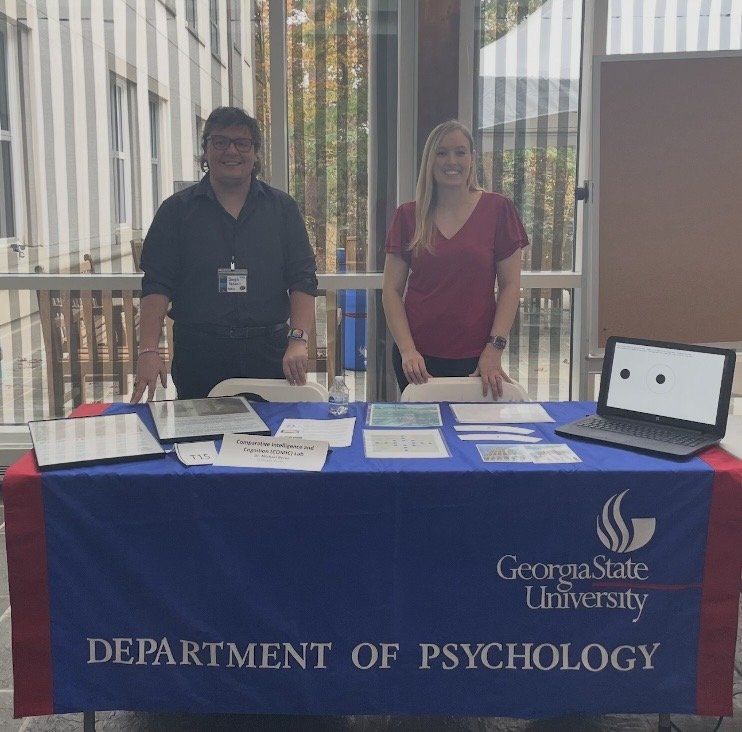
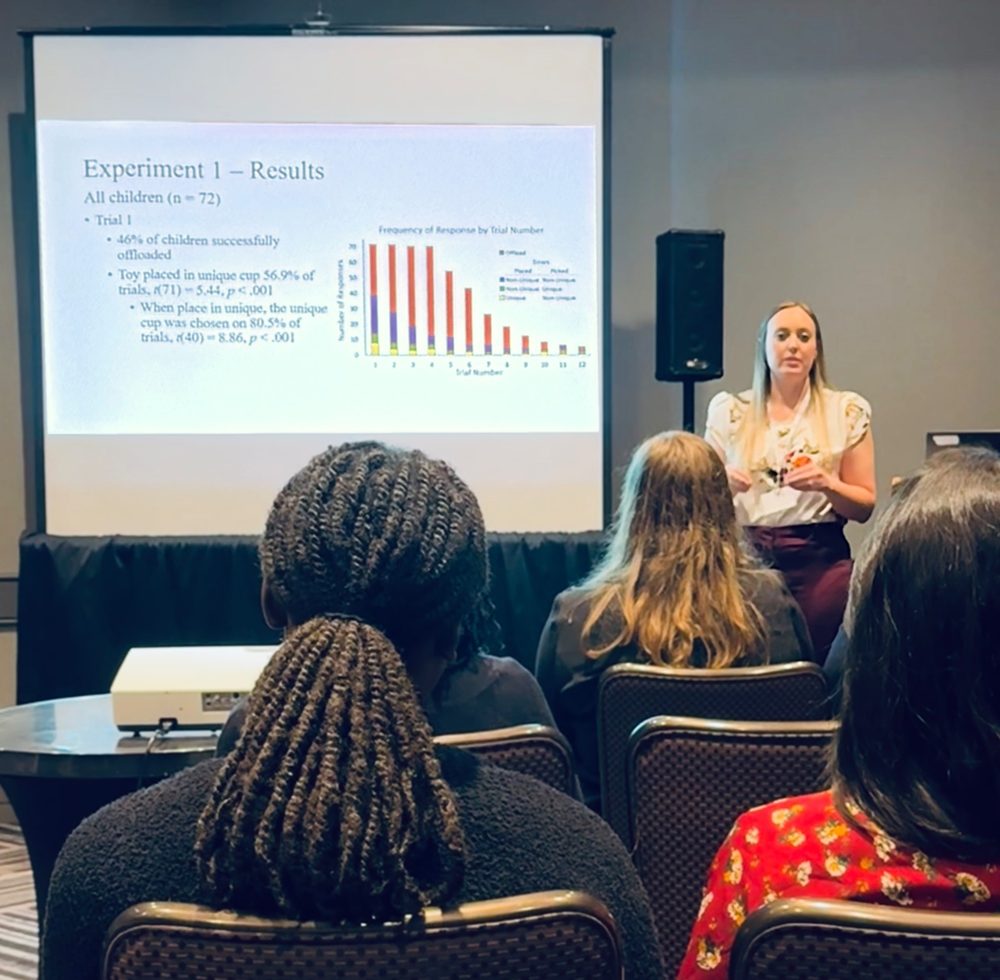
I bring the same rigor to every study: clear questions, careful measurement, and findings teams can act on.